Alisa Krasnostein is World Fantasy Award winning editor and publisher at Twelfth Planet Press and part of the Galactic Suburbia Podcast Team. She was Executive Editor of the review website Aussie Specfic in Focus!.
Currently working on a PhD in Publishing, in her spare time she is a critic, reader, reviewer, runner, environmentalist, knitter, quilter and puppy lover. She is a fulltime Mum.
It’s been another full on week. I’m really not sure what I was thinking earlier this year when I agreed to a bunch of stuff for Aug-Oct. Yesterday, I hit Week 29 which means next week I’ll be into my last 10 weeks. True to everyone’s word, it’s gone both ridiculously quickly and agonisingly slowly. And it’s really starting to panic me how much I still have to get done before the baby arrives.
At Week 28, they do the glucose tolerance test and a bunch of blood tests – mainly for iron levels. Because of my blood type, I also had to get a shot of AntiD. AntiD is pretty short in supply so you have to book that ahead of time to make sure they have it available. I did all of these last Monday. I’d been having dizziness and funny turns during my pregnancy so I was a bit worried I was going to fail the glucose tolerance test. In the end, the entire thing was uneventful. Apart from the grossness of the liquid sugar, slightly fizzy drink, and the morning sickness due to fasting, I was just tired – too tired to do the work I’d brought for the two hour sit. They gave me the AntiD about an hour in to the stint. And took bloods at the beginning. The day after I found out I was pretty anemic and have gone on some extra iron. So far, I think I’m starting to feel a bit more energetic since taking it. And I’m hoping it will bring that spurt of energy before the much promised slide into the final weeks.
I’ve been relying on GTD to help me get organised, ready and start to get on top of things. In the last post-Galactic Suburbia recording chat, we were discussing those who like to do things down to the wire and under pressure of deadline (me) and other people, who do things ahead of time (you know who you are people who wrote your Lit essays the week you got the assignment). I was saying that I think I like doing things so close to deadline because it forces me to be succinct, and allows me to hand it in without having to give the work more thought. That if I did it ahead of time, it would mean I could and therefore *should* think over what I’d done, maybe tweak it, rework it etc. That done wouldn’t feel like “done” if I completed it a week or two before it was due. Course, there have been the odd times in my life where I’ve rethought what I wanted to hand in *after* I’d handed it in, and doing the work ahead of time would have enabled me to improve my response. But I guess that hasn’t happened all that many times in life to justify a change in habit.
Anyway, directly after that conversation, I had a really busy week. I’d completed my Weekly Review on the Monday, which involves scoping out up coming deadlines and what you need to do to manage them etc. In that week, I had a couple of days of solid doctor appointments (I try and book up whole days for this stuff as I have the two hour commute, may as well not do that too many times if I don’t have to.) and then a couple of days of things like presentations etc (the Romance Writers conference, a MasterClass at Curtin etc). As I did my plan for the week and worked out what I wanted to prepare for each of my commitments, I soon realised that to get something done that was needed on Thursday, I needed to do it Tuesday and could only do it Monday afternoon or Tuesday due to other commitments. And similarly for the weekend commitments, could only do them Tuesday or Friday. But if I did them Tuesday, I could spend Friday on PhD research which would otherwise fall by the wayside for the week due to everything else.
Armed with this knowledge, that is how I managed the week. And then the clouds parted, angles sang and I experience a revelation! When you do things earlier than 5 minutes before deadline, it’s completely possible to forget about them and let them be “done”. And to in fact feel good about the fact that you are prepared for the next thing in your schedule and thus be working on the thing ahead of that. It was … dare I say it? Fantastically liberating! I didn’t have to rush around, didn’t need to flail and panic, as per my usual way of coping. I calmly went about my business. Got enough sleep. Had things packed and ready to go for each of my commitments. Had everything I needed on me for each commitment when I got there. And I calmly moved through life. That’s what happens, apparently, when you work this way. And I have to say, I really really like it. It’s a very effective way of managing pregnancy brain which renders me useless sometimes. And I suspect, it could be very useful for someone working on little sleep and holding a screaming baby. And on the Friday, instead of feeling bad and anxious about the presentations and public speaking I had to do on the Saturday, I actually worked on PhD stuff calm in the knowledge that I was as prepared as I could be for the next day’s gigs.
Pretty much every other day, I take a moment to check whether the other shoe is starting to drop. I really can’t believe how lucky I am to be being given the opportunity to not only work on Twelfth Planet Press all day every day but also to be expected to be exploring new ideas, try new initiatives and to study practices around me. That the point of this whole exercise is to learn things about publishing in a time of great flux in the industry, and to hopefully, take out the other end of this study, a more viable and tangible business. Seriously. How did I get here? (The answer is always: Helen). It’s seriously try that if you find something you truly love, you never have to work a day in your life.
And the other great thing is getting to talk a lot about it as I go along. Documenting it as I go so I can pull it together into some kind of exegesis at the end.
After spending last week immersed in talking and listening to other people talk about the industry, I’ve been mulling over our novella line. I love novellas – I love the format. I love the fact that they are meaty enough to really tell a deep, expansive story but aren’t as big a reading commitment as a novel. We’ve had a lot of critical success at Twelfth Planet Press with this format. There is no shortage of really great novellas being written. The problem has been that the format in print is just not a viable product. As of this date, the only one that’s ever broken even is Horn by Peter M Ball. At some point, I had to make the decision that I couldn’t keep buying and publishing novellas when they weren’t breaking even. As much as I love the form, and as much as I believe that indie press exists to publish and bring to the reader works that are outside of the scope of commercial publishers, I couldn’t justify the drain on the cash flow. Especially when eventually that comes at the expense of being able to afford other projects that might be more financially viable.
Last week I participated in a panel with Joel Naoum from Momentum discussing all things publishing for a postgrad MasterClass at Curtin. One of the points that struck me about what they are doing at Momentum, is being able to pursue projects that are not viable in print form by going solely digital. Without a doubt, with the democratising of publishing via self publishing and with the merging of big publishers, we have two new and very strong factors at play. The first is that there are more titles being published every year than the year before. And I don’t really see that changing in the near future. Readers are still reading but I suspect the readers for every title is probably less, as the readers spread across more and more titles. I believe this means that the potential to earn for a writer (and publisher) is going to be less per title. Similarly, as the big publishers merge and try to compete against Amazon, they are looking to concentrate on high performing bestsellers. And we’ve seen that result in the loss of the midlist for some time. This, I still think is good news for a publisher like TPP, but not for authors who are still capable of earning reasonably but that “reasonably” is being redefined. And this is where we are seeing a lot of changes in publishing business models as savvy midlisters experiment with new ways to make a career.
A third, and no less important, factor is distribution. Bookstores are closing. Book distributors are folding. And it’s getting harder and easier to get stocked in bookstores. I’m finding that TPP is being picked up by a lot more franchised outlets of the big bookstores in Oz but that’s happening as I work harder to do distribution myself ie dealing with each bookstore one by one. At the same time, I’m also finding other bookstores becoming less open to stocking indie press. Responses like we only stock books by publishers like [named big five publisher] are also coming in.
What’s going to happen to traditional publishing? We don’t know yet but if publishers want to still be around, we’re going to have to adapt and change our models. What used to be is no longer. And what worked before may not in the future. What is clear is that we need to be flexible and open to new things. As I posted the other day, it is really clear that the stigma of digital only publishing or digital first publishing has long been lost in the romance genre. A genre which is alive and kicking and very financially successful.
The sum of all these thoughts: I love novellas and I’ve been looking for a way to be able to publish them again. And I’m keen to experiment with publishing models to see what and how to be successful going forward. And so, finally we are open to novella submissions again! http://www.twelfthplanetpress.com/submissions And hopefully, I’ll be able to use this in my thesis somewhere I do quite like the double credit points of working on my press AND my PhD at the same time!
Over the weekend I attended the Romance Writers of Australia annual conference which was held in Fremantle, WA this year and titled Riding the Waves. It was my first time at a non SF (and non science) conference and I have to say, my mind was totally blown. It was a completely new and entirely fantastic experience and I think I might be hooked (as I was promised by Peter Ball who also attended).
I’d had a few engagements prior to the weekend that were related to this event as Curtin organised an academic programme on the Friday, related to the conference, and Helen was here. I was part of a MasterClass for Curtin postgrads looking at publishing opportunities post submitting (that was weird, being probably the earliest on the PhD path in the room). We also went to Helen’s book launch for her new book, Beyond the Cyborg, which was a lot of fun. So by the time Saturday morning came around, I was really glad that my husband had kindly agreed to both wake me up in time to leave and to actually drive me to Freo for my 9am panel. I wouldn’t have got there otherwise. He also hunted around trying to get me something to be able to eat to stave off morning sickness, sadly to no avail. And I entered the conference.
First up. The conference swag bag. It rivalled the World Fantasy bag but even though it had maybe a third of the books, it beat the WFC one hands down by having a pen, a keep cup AND a BOX OF CHOCOLATES. Hey, I’m easily won over. This was a conference that had a lot of chocolate just lying around for you to snag. You gotta love that.
The programme was already running behind schedule when I headed in to the plenary session and I stood at the back to listen to most of the keynote speech by Julia Quinn. She spoke a lot about what it takes to be a writer and a lot about the journey of being a writer. She was funny and smart and a pleasure to listen to. But one thing in particular she said really stood out for me – “you will never hurt your career by helping another author”. She elaborated by saying you will never lose a sale by promoting someone else’s book. That the only way you can lose sales is through the quality of your own books. And it was the beginning of a bit of a revelation for me. Not the sentiment, but that someone said it out loud. That it’s not a zero sum game – readers will read your book and someone else’s. And reading someone else’s doesn’t mean they won’t read and like yours. Or better yet, someone else having success doesn’t preclude you from having your own success.
After the keynote, I realised the segment before our panel was to happen so I grabbed a seat – the room was set up like a big banquet hall, with large round tables rather than rows of chairs. It was the main session room and I think the only programming until break out sessions later on. So everyone at the conference was in this session. The segment that followed the keynote was a small presentation by two head honchos from Harlequin. I’m not sure I can even express what this experience was. They basically ran through all their imprints and lines and talked about upcoming initiatives at their publishing houses(s). Which sounds simple enough, like an advert. But the advert was to woo writers. It was about selling themselves as a market that *wanted* the writers in the room to want to be a part of them. And what was exceedingly clear was that they have a really clear and thorough understanding of their readership and how to sell their books to them. They understand the business and the market.
After this, I was on a panel discussing pathways to publishing, moderated by Alex Adsett. Because the session was running behind, our panel was cut short but we discussed the different expectations and processes for a range of presses on submissions and rights and so on. It was interesting to see how much more digital only publishing is accepted and being adopted in the romance genre.
We broke for morning tea then, which was fully catered. And I was able to appease my growing morning sickness. I also caught up with both Peter and Donna. Peter made a comment to me about how every writer knows what exact genre niche it is that they write in and for the rest of the day, I asked every person I met what it is that they write just to see. And every single writer I asked knew *exactly* what their niche is (like out of 27 or something different sub genres). It was deeply fascinating. Someone came up to me at morning tea to speak to me about TPP and a book they had and we had a nice chat. After that I headed into a breakout session.
I had intended to work or read in between my two commitments which were hours apart. I’m not one for attending panels and I’m a natural introvert. This would be the kind of thing I would do at a SF convention if none of my friends were there – I’d just take off to the cafe and have a coffee and work and be quite happy. Except at this conference that didn’t happen. Because people didn’t just walk past you and ignore you or look you up and down and judge you and walk on. They introduced themselves to you and started a conversation with you. And before you knew it, you’d met a new person. This, I discovered, is what it’s like to go to an actually friendly convention. And to be in an authentic safe space. Everyone there was there for the conference. They were dressed professionally. And they were there for the same, specific purpose, to network, to learn and to share what they knew.
I chose the “Buy This Book!” breakout session after morning tea. It was a workshop run by Abby Zidle, an editor at Simon and Schuster (NY). A writer from the audience was invited to present her novel as though she was an acquiring editor advocating the publisher buy the book. And the rest of the panel was made up of other members of the audience, each representing the different department heads that would sit in an acquisition meeting. And Abby, as the mock publisher, led the mock discussion that would happen in a press house meeting to consider whether or not they buy a manuscript. I learned a lot in this session, more than I expected to. I knew how this process works – that your editor has to convince all kinds of people that the book will sell, beyond just “but it’s a *really* good book”. What I really liked is the idea that almost noone other than the acquisition editor will have read the manuscript for a meeting like this. It’s both weird and obvious. I like the idea that all the way along the process of selling a manuscript to a book, you are constantly in discussion with people about how good it is where the person buying it will be buying it on the say so of the editor and then the bookseller. People hand over the cash, to produce the book, and then to buy it as a reader, without knowing how good the book actually is. There aren’t many other products out there that anyone buys without really knowing just exactly what it is. I guess movies are the same. I learned a lot of things in this session. Abby was very generous in sharing and explaining all sorts of aspects of publishing including print runs and profit margins and why publishers invest in what things and so on. I took a lot of notes. *I* took a lot of notes in a con panel.
Lunch happened after this session. Catered lunch. I headed over to the restaurant and grabbed some food and then was ushered over to the special seating area for the conference. I thought this was a bit odd. I got sent down to the end of a very long empty table and by the time I had put all my things down and sat, more writers had been similarly sent my way, had introduced themselves to me and we got involved in a long and fascinating conversation. I think I met more published novellists that day than I’ve met in my whole life. And most of them were multiple times published authors. We talked about feminism, we talked about the romance genre, its being snubbed by most on the outside, and on writing and so on.
The thing that really struck me being in and amongst the attendees at this conference was how savvy everyone was. Being able to write a novel and sell it seemed kind of a given – and I guess seeing as most of the people I met had successfully done that, perhaps it was? But that what they really knew was their business – they know what their audience wants and how to give it to them. And they know how (and want) to mentor upcoming writers so that they may know what their audience wants and how to give it to them. There was a genuine air of sharing – of knowledge and support and know how. That information and experience isn’t for guarding and protecting lest someone else also find out your secret to success but rather that by sharing and helping others to also be successful, everyone benefits by greater success. Rather than spending time fighting and competing with each other, and tearing each other down so noone really achieves greatness due to being so busy fighting and fending off (jealous) attacks, they spend the time teaching each other how to be great. Kind of sounds like a utopia doesn’t it? When I asked a few people about it – that there didn’t seem to be much ego or pissing contests going on in the room – they said that there was a little of it here and there if you scraped beneath the surface but that no, by and large, it wasn’t really that kind of scene.
I met many women, of different ages and walks of life, who totally got what I’m doing at TPP, what the point of my thesis was and a bunch of other things that are true in my world, like getting ready for a baby and balancing career and motherhood etc. It seemed to me that romance is a genre that has been snubbed by the rest of the “literati” and it has sort of shrugged its shoulders, thought “well that’s your loss” and just moved on to do what it does – nurture writer and readers and sell a HECK of a lot of books. And, you know, make a lot of money. And not care what anyone else thinks about what it’s doing. It reminds me a lot of when I talk about sexism with women who’ve been fighting and around the issue for a lot longer than me and tend to just say – yeah, I just don’t listen to that shit anymore and don’t hang out with people like that, it’s not a fight I’m gonna win and I’m done wasting my energy and time on it. It always seems so relaxing and liberating, really.
After lunch I headed to a craft panel with one of the writers I’d had lunch with and brushed up on all things writing dialogue. Then I headed off to my pitch session. It was the first one I’ve ever done in person and I was really nervous about it. How would I facilitate nervous people through 8 minutes of them trying to sell their manuscript to me? I prepped myself a bunch of questions as prompts and met a lot of really enthusiastic people. It was pretty nerve wracking but I guess enjoyable. I asked to see some manuscripts and I’m interested to see what comes in. I finished off with a lovely debrief with Alex and Peter before my husband came back to pick me up.
And, I have to say, SF, we’re doing it wrong. There was so much about how this conference was organised, including the emails that came out before the event (which had information for people who had never attended before on what to expect and how they could fill the time so as not to feel nervous or anxious), that it was advertised as a perfume free event ahead of time was of interest to me (both because it was considerate of others but also, the opposite of the ones I’m used to which need to remind people to shower!). But also, I am so interested in the active community building that was on display and evident by the friendships and by the friendliness. Other people’s success was not sneered at or envied, it was applauded and encouraged. After all, when everyone else looks at you as a group to sneer at, you don’t really need to spend time and energy doing that inside the group, do you? SF has much to learn from this genre – they are on the cutting edge of the digital revolution, they know how to market and sell their work, they know how to take a one book deal into a long spanning career. And I can’t help but think it has a lot to do with the positivity and encouragement within the community.
I took a lot away from this conference. And I also want to be part of this community. I’m considering joining the RWA and going to next year’s conference in Sydney. I think there is a lot more I can learn about the publishing business here. And I really really liked the people I met.
I am really liking my design wall. My charm quilt is almost finished – all the hexagons have been pieced together and now I am sewing the final panels together. I almost think I might miss all those teeny tiny triangles, now that I’m done.
All the while I’ve been working on this quilt, I’ve been looking forward to pulling it down and using the design wall to get a good look at my WiPs. And today was finally the day. I’ve only just begun pulling out everything from my craft cupboard and all the other nooks and crannies I’ve been stashing projects in progress. It would appear that either my design wall is not big enough, or I might have too many projects. My husband and I disagree about which it is
As I was pinning up projects, I began to see the real benefit of a permanent design wall. I liked it for the charm quilt to be able to piece it and then rearrange and try out different layouts til I was happy with the overall look. The same will be for each of the quilts shown here but I also like it for being able to find all the bits and pieces of partially cut out and sewn blocks and keeping them in a place where they don’t get lost. It reinforced my long held desire to have my own studio. I really really want a proper workspace where you can keep things up and together and not spread all over the house.
I think one of the reasons why I am so bad at finishing projects is because I lose where I’m up to and it feels too difficult to sit back down and re-figure it out. That was partly why I was excited about bringing my craft into my GTD system. In theory, that shouldn’t happen anymore. And I can see that using a design wall for projects in progress will also help that. And I think both will help me keep my momentum and interest alive enough to focus on finishing projects before moving on. It will be interesting to see whether my overall WiP project count changes over time. I’m thinking of tracking that
Currently up on the design wall are 7 quilts. Though the cameo with log cabins (lower right hand corner) was actually going to be 1 of 3 and probably now just needs to be quilted and bound. I also found 1 additonal finished quilt top and another that I’m going to completely pull apart and redo cause I hate it. And I still haven’t finished auditing my craft room yet. (Let’s not even discuss the knitting WiPs!)
I think another reason why I am so bad at finishing projects is because I fear not having anything left to do. I fear final completion. When dissected, it’s really quite ridiculous. Firstly, actually using all your stash and doing all your queued projects gives you permission to buy or start new ones. And WiPs are a debt on future time. Claustrophobic if I think about it too hard. Secondly, my actual list of dream / intended projects is going to be, when I sit down and make it, based on my current stashing alone, already probably another decade’s worth of work. Thirdly, the problem with finishing quilt tops is the having to buy wadding and backing which is expensive and then having to quilt them. I do hate the additional expense that finish garners. And also, I have come to admit, that I don’t actually like quilting. Not by hand anyway. And right now, I don’t have a sewing machine so I don’t have the option to do it that way. I’ve decided to pay someone else to quilt my quilts. And that’s also going to be something I have to balance against the fact that we have a baby coming and I have become a full time student. But … otherwise, what exactly is it that I am doing here? I might have to save up to get them quilted slowly over time. But at least now I have a plan and a way forward, so that feels good.
Next up, after auditing just what exactly all my craft projects are is to make a next actions list. Stay tuned for more finish-it-up-itis around these parts.
I guess somewhere along the line I joined the cult of David Allen’s GTD. And it involves rolling out management systems to increase your productivity across all of your life. The goal is to have a mind like water and in order to do that, you need to feel like you’re on top of all aspects of your life – all the projects you’re working on, the ones you want to be working on at some point in the future and be able to take a step back and see it all at a glance whilst also being able to view your life’s goals and dreams all in the one go.
It’s taken me a while to get all those systems into place but I can see how once they are, and reassessed regularly, how your mind gets calmer and you feel less stressed. Even though, you don’t have any less work to do or are any less busy. You just get to stop thinking thoughts over again, having to remember things or having to figure out what you have to do when or what your priorities are.
One of the techniques I’ve used in the past to remind myself of things I have to do or to get myself to do things is to leave them out in front of my face – piles of paperwork on my desk when I really prefer clear desks, things out on countertops and tables, craft projects in progress out on chairs and by my bed and all over the place. My thinking was if I put them away, I’ll forget that I was working on them. Or because I prefer clear, clutter free space, I’ll work on or do whatever is in the way so as to get the reward of clear spaces. Thing is? Your mind desensitises itself to the clutter so you get numb to it. But only numb enough so that you don’t notice it at a glance but not so numb that it doesn’t create background white noise stress.
It never occurred to me that there could be another way of keeping track of what I wanted to get done. Or that living in organised, clear spaces would energise and motivate me. I thought that was the goal rather than the means to the end.
Allen says that everything should have a place and that everything should be in its place. And the process of working towards that requires an assessment of just what exactly each and every “everything” is and a decision about what should happen to it – does it need something done? What’s the next action required for it to be done? Do you need it? Is it to be filed? Trashed? Does it need to be found a place. And then you put the next action on your list of actions and you put it somewhere, maybe away, cause you already have a stake in the ground so you no longer need the item itself to trigger a reminder for you. You have a system now.
I always thought that order and organisation and systems ruined/prevented creativity. I’m not really sure why I thought that. Considering I actually really love to feel organised and I thrive better on routine, or rather am a person of habit (just usually bad habits). I suppose I thought that my natural tendency is to want to *create* order through *doing* and that if there was already order, I wouldn’t be motivated to *do*. It never occurred to me that order and feeling organised and on top of things would actually energise and motivate.
It turns out, it feels fantastic to be able to put things out of way and know they aren’t out of sight and won’t be forgotten. A huge relief. A massive weight gone. And I can’t describe how it feels to start to see my house begin to look how I always imagined a grown up person’s house to look.
And the bit about creativity? I don’t think my brain has been so clear and able to work, effectively and productively, in a very very long time. I find myself writing paragraphs for my PhD randomly and with ease. And I’ve been working solidly on the quilt in the picture here.
In May, I took apart the whole quilt top that I’d assembled on this project so far as well as well as all the rest of the hexagons I’d pieced (which was enough for the rest of the quilt top, except I hadn’t decided that yet). It took me nearly a week to unpick all the hand sewing which I’d done over the course of maybe two years. And then I picked a new pattern. The original pattern, you see, didn’t work out – I had wanted to work with more colour play – light, dark and mediums to create a sense of shadows and movement. Except, I’d pieced the hexagons with related materials rather than in true charm square style – randomly – and it just didn’t work. I decided to abandon the original plan and just go with something else.
I pieced all the new hexagons first because I knew that what I needed to do was lay them all out and work out how I wanted to piece them together for the quilt top, rather than do it ad hoc as I went along. As I normally would have done, eager to see “progress” as I worked. But I stuck with it and I really did piece all the hexagons first. And then I got my husband to help me rig up a design wall. My very first design wall. And I’m addicted to it now! The freedom it’s given me to be creative has been amazing. I threw all the hexagons up, in a rainbowish layout. And then I spent a few days rearranging them all til I got the quilt to look balanced. I’ve never done that before. I’ve never worked on the overview as well as the fine scale at the same time, knowing where I was going as I was going. I thought working like that, on craft, would reduce the feeling of creativity – the knowing how it was going to look by the end at the very beginning. I thought it would take all the fun out of it. But actually, it’s given me focus and direction because at each step, I’ve known what the next action was. There’s no need for procrastination because I don’t need to think or improvise what happens next. I don’t need to put it away for a year to think about how I’m going to make it work.
And before the end of August, I’m going to have finished this quilt top. I’ve never worked on a project this way before. I’ve never finished a project this quickly before. And I ended up with colour play in the end after all. Adding the white triangles to create a star around each hexagon has added a sense of movement. The rainbow (a layout I have formally always detested as I felt it was pedestrian) actually gives the unmatched pieces a sense of uniformity and pattern. And the dark and light layout for each hexagon actually gives some shadow affects too.
The process has been really enlightening. Both for how I will approach crafting going forwards but also for much bigger life projects.
And normally, I panic when I am so focussed on one craft because I feel like it means I’m never going to be obsessed with the other one again. My old knitting versus quilting war. And I have a lot of knitting WIP projects there to be done. And also a lot of quilting ones. But now I have a “Craft Projects I Want to Make” list. Which I am still building. And now I have a management system that I am looking forward to trying out, once I’ve finished the Charm Quilt, to see if it will ease my distress over choosing my craft obsession We shall see! I suspect there will be some serious finishitupitis going on around these parts in the next few months.
Turns out I have a lot to say under this post’s subject heading. I’ve been working on part 1 for a few days now and I think the problem is too many competing thoughts. So here’s part 2 first, instead.
I guess in some ways I feel very much against the clock at the moment. Some things, you just can’t apply for extensions on – tenders, grant applications and babies. I have a lot I want to get done before the baby comes. A lot of things I want to get sorted or just dealt with so that I don’t need to deal with them afterwards. Right now, I have time, and mostly good headspace. Later, maybe not so much.
And in the process of working through stuff and how to set systems up to cope when I have more on my plate I’ve been able to come much more ruthless and decisive. I spose it’s a momentum you develop and the hard bit about saying no or culling things from your life is the starting. Once you’re used to be able to say no, once no isn’t so terrible anymore, once you experience the freedom that no brings, it’s a lot less scary and a lot easier to say.
I’ve been weeding my book collection. The truth is, it’s not really a well thought out collection anyhow. It’s a bunch of gonnas, maybes, one days and shoulds. When you move that clutter out the way though, it’s left with OOh! and Hey! and I really have been meaning to! I’m weeding my shelves a couple of books at a time. Sometimes I have to think about it for a few days – if I like that writer’s whole body of work except this one book, do I have to keep that book? Turns out, I’m not a library and I am under no obligation to have a complete archive – I’m only ever going to lend a book like that with, “I personally thought this one was shit, but hey…” I’m slowly pruning it to bookshelves where every book on them means something positive or uplifting (in experience/memory) to me. And I’m removing books that I feel I need to have because someone else will be impressed by my owning it. Or books I have there for guilt reasons – gifted to me, or struggling to enjoy or feel I should have to read or maybe if I try reading in a couple of years time I’ll make it past the first 40 pages.
I don’t really have much time for leisure reading. It’s not like that fact is going to substantially change in say the next five years. Any book I have in my TBR queue is taking the place of a book that’s yet to be published that I might want to read. Or will become a feeling of guilt when I do buy that 2015 book and I haven’t read the TBR pile yet. Cause I have books still sitting in my TBR from more than 5 (10 and even 15) years ago now.
I’ve started trialling turning off backlit electronic devices before bed and reading paper books in an attempt to combat some of my insomnia/trouble getting to sleep. It’s helping. But I’m also discovering that a lot of books I have in my TBR are not fun/enjoyable to read. If that hour before bed is my only time in the day for complete relaxation reading and might be the only time for the foreseeable future, why should that hour be a struggle, or be me forcing myself to push on with a book because I feel guilty about not reading it or feeling I should read it or because I bought it therefore must read it? I’ve stopped reading a lot of books in the last three weeks and culled them – mostly pulp crime or chic lit – because those books should be easy, page turners, and if they’re not, why am I reading them? Being able to start making that decision that if I’m not enjoying a book after 40 pages, it’s wasting the time I have for enjoyable reading, is helping me work through a bigger issue.
What do I think will be so different in 5 years time in terms of enjoying this book more than I am now? I often put a book down that I’m not getting into with the thinking that maybe in a different mood, or a different place in my life, I might enjoy the book more. I can’t really think of one example that that’s actually ever been true or happened.
I saw a great pic on Facebook the other day that said “If you don’t enjoy reading, you’re doing it wrong” – you know how sometimes some random placard just hits a chord with you? I’ve been thinking a lot about how some people like to say that if you haven’t read X you’re not entitled to an opinion about Y genre or you can’t consider yourself a “real” fan or you’re not as worthy of participating in discussions, you haven’t “earned” your cred. I came to SF in my own way and in my own time and on my own terms. But for a large portion of the last decade or so I’ve been feeling obliged/guilty/required to get certain books read. So that I can consider myself a proper legitimate person entitled to an opinion. The thing is, I find a lot of those books boring. And I felt bad about that. I felt inadequate. Like, maybe I didn’t really enjoy the genre if I didn’t enjoy X or Y. Or didn’t get why other people did.
And that made me stop enjoying reading. It’s given me a reading block for the last 5 to 7 years. Certainly for novels. It makes the culture consumed section of Galactic Suburbia hard, a struggle, and sometimes embarrassing for me.
Then I started culling books I wasn’t enjoying. I started looking at each book I was picking up to read from my TBR at night and asking myself if, given I have a limited number of books I can read over the rest of my lifetime, did I really want this book to be one of them? It’s amazing how, with that perspective, it’s easy to ditch a book you’re not enjoying. Especially when you read slowly and carefully. Especially when the choice is between forcing yourself to read something you don’t like versus zipping through something you’re really engrossed in. Ahhh … being engrossed in a world and a story. Wasn’t that the point of this whole hobby in the first place?
And then I came across this a week or so ago:
It sums up exactly where my head is at right now. I don’t need anyone else’s approval to sanction my fan activity as legitimate. I don’t need to sit anyone else’s test or read their curriculum to get a pass. I don’t need to like what other people like in order to prove my worth. I’m me. And I like what I like, because *I* like it. Because my experience is unique and personal. And my interests, and what interests me, are mine. And lots and lots of the books that I’m “supposed to like” are books that I probably will never be able to relate to no matter how many times I try and no matter how many decades I try to read them in. Luckily for me, the genre I love is diverse and broad and has lots of different niches and books within it. And there *are* lots of books that *I do* enjoy reading. And forcing myself to read books I don’t to win some other person’s approval or permission is a complete waste of *my* time. And in fact, was working to make me kinda hate my so defined genre.
Who cares if person over there thinks I don’t get to have an opinion? Last time I checked, no one has been awarded the policing-the-genre badge. What if I have my own opinions anyway? It’s kinda been working out ok for me so far. And … this is supposed to *fun* after all, right? Right? Deciding who gets to have an opinion and who doesn’t, based on your own contrived approved list of books, is just another subtle act of excluding people. And I finished highschool a looooooong time ago now.
Ah… the freedom! I don’t need your approval. I don’t need your permission. I don’t need you to like me.
I completely underestimated this whole zero inbox thing. I was promised great things but I admit I was a bit skeptical. I’d been slowly chipping away at my inbox for months. You know you have a number of emails pending that you get comfortable with, that you feel like you are in reasonable control of it all. It used to be 100 for me. And then I managed to get it down to 50. Lately it’s been between 20 and 40. But this last week, I’d been hovering at around 8. I was listening to one of the David Allen CDs yesterday and he said something about coaching an exec who had got theirs down to 5 and was getting ready to leave for the day. David encouraged him to go all the way to “see what it would feel like”. And as I stared at my final 5 emails late yesterday, I thought, “hey, let’s just see what it feels like.”
And what did it feel like? I’d been feeling bad all day that I hadn’t really done “enough” work for the day. I’d been doing small tasks and more backlog type things. And then at about 6pm, after I reached zero inbox, I suddenly found myself at my desk, typing solidly for a full hour, working on my PhD Candidacy application (it’s the first step you need to do as a phd student and basically outlines in 10 pages your thesis), I wrote 2700 words into what had previously been a blank, named document. I outlined the basic methodology and objectives, some of the background, some issues that I think need investigating to nail other bits down, even referred to material I’d been reading as part of my lit review. I wrote 7 pages. They aren’t great. But it’s a 10 page document. It’s too big a project for a PhD. Which is a great start – I have a lot of material to pare down. Lots of opened loops to go off and investigate to nail this down. I have a way forward. In one hour. I haven’t felt so clear headed in a very long time. Didn’t even know I could still think that clearly.
It was amazing.
That’s the promise of this whole management system – that by setting it up and maintaining it properly, you free your head from the day to day minutia, from thinking the same thoughts more than once, from being stressed about things you need to remember or need to do and you can move on to being creative. This was the first glimpse of this for me. And I’m addicted!
So I’ve been absent from the blog. Mostly because I don’t feel like I have much to post about or that I have too much to post about. I noticed yesterday I’ve become that person – you know the one who spends all day, every day, alone and so when the chance arises to talk, the words just keep pouring out. I’ve become way chattier than I used to be. Small talk. And things. Cause it’s just me, and the puppy, for most of my waking hours.
I also didn’t know how many posts you’d read on how awful I felt. I figured maybe like two? At my last visit, I guess nearly a month ago now, my midwife said I’d start to feel better at about the 22 week mark. *22*!!! Talk about constantly moving the fucking goal posts. If I’d known at 8 weeks that it would be another 14 weeks til I felt less than terrible all the time … well. Let’s not go there. And to be fair, at 8 weeks along, I knew it was possible I might not feel better at all til delivery, but I couldn’t really think too hard about that. In any case, thank goodness I’ve had a pretty good run this last fortnight. I’ve had a couple of less than awesome days but that’s a huge improvement from where I was at. I’m up and running enough now to have started beating myself up about being so unproductive for the last 4 months (cause that’s how I roll).
So. An update. In terms of the baby, I had the just less than 20 week anatomy scan and got to see all the organs and limbs and whatnot. The baby still does not stay still for a minute, and definitely not for 3D scans. I’ve got one brief profile, of which my mother is most pleased with the nose we’ve got. So that’s good We (husband and I) know the gender but we’re keeping it a secret. We sort of have a name picked out but I want to wait til we meet this new person to check the name fits (I should probably have a short list in case …). The baby is ticking all the good boxes, and that’s fabulous. It’s in the 80th percentile, which is generally where I like to sit, in all things marked on a bell curve
I meant to take a selfie this week to show my bump which appears to be larger than expected for someone 23 weeks along. People keep asking me if I’m having twins. I am not. I’ve put on weight, at the lower end of the range and all on my belly. It’s funny (it’s not really) how bad I’d been feeling about myself for putting on the weight – the midwife I’d been seeing had made me agree not to put on any weight this pregnancy. It was totally impossible not to eat and to not eat carbs and also manage my morning sickness. I don’t have any hunger at all, really. I think in the last 20 weeks, I could tell you the three times I’ve actually been hungry (two were in the last fortnight). Most of the time I go from not even thinking about food directly to nauseous if I forget to eat too long. I don’t really have any cravings as far as I can tell. And smells don’t really seem to bother me. Last visit to the doctor, I had a different midwife who was appalled at the idea of not putting on any weight. She told me not to be so hard on myself. And to just do what I need to do. I’ve switched days so I can see her for the rest of my pregnancy, except for the next appointment which I made previously and for which I am now dreading, on account of … weight gain.
But the whole not having the pregnancy experience that everyone was quick to tell me about – the smells, the food cravings etc etc has really helped me put into perspective a lot of this stuff. My experience is mine. People are individuals and we work to a kind of bell curve where on the whole shared experiences, averaged out, will be similar. But they aren’t the same. And what works for you might not work for me. And what happens to you, has no real bearing on what happens to me. I’m hoping this realisation will stay with me as we enter the next phase after this one and get exposed to “drive by parenting” as Tansy calls it. It’s useful to hear how other people coped and their stories. But it’s important to keep them in perspective.
At about the 22 week mark I did start to feel better – I still have to manage the sickness stuff but I started to have more energy. More will to live. I might have even worn lipstick a couple of times. Around that time, Tansy and I were chatting pre Galactic Suburbia recording, and she said to me that I needed to learn how to hack myself. I’d mentioned that on Wednesdays I found that because I *had* to leave the house at the crack of dawn and spend an hour/hour and a half out of the house, I was getting a lot of work done by going to a local coffee shop. I take my laptop, a couple of files of reading that I need to do, and sit and drink a fake coffee, eat a muffin and just work. I was finding it was my most productive hour of the week – reading 20k words and actually editing and getting feedback to writers and progressing things. Hence her suggestion to figure out how to hack myself.
I’m not sure if it was because I had more energy that week, or the experiment I tried which was setting myself 1 task/errand to run each day that required me to leave the house. Not the most efficient way to run errands, spreading them out across the week, but it meant I had to get dressed, leave the house, drive, speak to someone, deal with money and then come home again. And that process seemed to jumpstart my brain out of sluggish lazy Sunday morning and into sharp, clear focussed, capable of thinking brain. I came home every day last week, walked straight into my study and worked at my desk (for the first time) for 6 or 7 hours straight. A miracle. This week, I haven’t left the house as much but the routine of last week has meant that I tend to just go straight into the study and stay there.
The other thing I did last week was admit to myself that I was just floating. Sometimes the hardest part of fixing a problem is admitting and defining it. I was coasting in life, in TPP, in my studies. I had no plan. I had no goals. I had no milestones to work to. I had no way to measure if I made good use of a day or not. Sure, I have a baby sitting at the 80th percentile to show for this year, but it doesn’t feel like I’ve done much about that other than hold on for dear life and survive it. I realised that I needed to do a huge planning session, a big think about how to figure out how to know what “not floating” meant. And that that would take more than five minutes. So I drew myself up a short term set of 10 goals for last week, each with about 5 small achievable tasks. I wrote them out and stuck them up on the wall and I pulled out my Red Tick pen. The one that marks off SUCCESS. And I set about doing those tasks.
And in between working on those tasks, I hauled myself back to the beginning of David Allen’s Getting Things Done and I started working through that. I’ve been sitting through one webinar from his website as the start of every day. (I might have a GTD Connect account too.) And now, I’ve moved on to working through a series of CDs we have which is his 2 day workshop (I bought them for C for his birthday a couple of years ago – he’s never listened to them, turned out he wanted the templates and things that came with the CDs). I’m starting from the bottom up. I’m working through every aspect of my life to get myself into a working system that enables me to get things done. This includes having a set in tray for all my physical shit that comes in – bills, letters, receipts, tasks – and keeping it at zero. Working with zero inbox on a daily basis. Clearing all my email backlog (currently I have two years worth of backlog to clear out). Filing everything. Having a system to keep track of all my projects in progress, every idea or thing I need to chase up. And having my house exactly the way I want it – clear space, clutter free, no backlog, no rooms with junk in it, no cupboards you can’t open, no crap you don’t need. No things in my life, physical or electronic or mental, that need to be dealt with but niggling at me cause I’m not.
It’s only week 2. But I’m doing not too badly at zero inbox – I’m at about 8 emails by the end of the day. I’ve got a plan and a system with slowly working through backlog – electronic, email, paper and life. And I’m sorting actions on all that “stuff”. And I’m starting to think about what it might be like to live a life with no backlog, no “oh I have tos” lying around. I used to be scared of that kind of thing. Like, what would I do? But I think the good news is, you never don’t have new things, new opportunities coming in. With no backlog, no mental baggage, no unnecessary stress, you don’t have to be slowed down in acting. That could be cool.
And we do have this new person joining our household in less than 4 months. I’ve started clearing out their room. I’m making progress on that actually. Making space in my physical and my personal life. It’s a very definite deadline I’m working to. I’d like to have all my backlog cleared so that I can make it all work. For the first time this year, I’m starting to feel like that might actually happen.
Several exciting things have happened about the offices (I mean house) this week.
First up, Kaaron Warren became the first Aussie ever to win a Shirley Jackson Award. This weekend she won for Best Novella with “Sky” from her collection Through Splintered Walls. The Shirley Jackson Awards recognize work that is innovative, disturbing and excellent. And I’ve long aspired for the work we publish at Twelfth Planet Press to be considered of this calibre.
“Sky” also won the Ditmar Award, the Australian Shadows Award and the Aurealis Award, becoming the first story to win all three. It’s such an astounding effort and I’m so proud that I had the opportunity to work with Kaaron on this collection.
Yesterday, we released this fabulously, deliciously inviting, scrumptious book trailer for A Trifle Dead which was made for us by Film students at Curtin University as part of their term work. It was a lot of fun seeing this come together and hearing about the progress and I think they really nailed the book in their interpretation. (We’re doing the ebook for $5.95 this week only to celebrate the release).
And finally, this week, all three of us at Galactic Suburbia got Mind Melded over at SF Signal on our favourite genre road trips of all time. I chose Star Trek Voyager cause I just started an entire series rewatch and I still love everything about a TV show with a female captain
In which we ask the all-important question, what do David Bowie, Tolkien, Judith Merril, H.R. Giger and Joanna Russ have in common? Also harassment in SF, and the many shades of awesome that was Captain Janeway of Star Trek: Voyager
Elise Matthesen reports sexual harassment at Wiscon, kicking off a long conversation across various spots on the internet about harassment, procedures, and gender issues.
TANSY:Captain Marvel: Down, Kelly Sue Deconnick, Dexter Soy & Emma Rios (artists); Xena Season 4; Ovid’s Heroines by Clare Pollard, Warehouse 13 Season 1
ALEX:Abaddon’s Gate, James SA Corey; The Lowest Heaven (anthology)
Please send feedback to us at galacticsuburbia@gmail.com, follow us on Twitter at @galacticsuburbs, check out Galactic Suburbia Podcast on Facebook and don’t forget to leave a review on iTunes if you love us!
This is a very hard post to write. In fact, it’s so hard, I’ve started trying to write it several times over the last couple of years. Every time, I’ve made it part way in and then decided it was better, politically, to just shut up. Let it slide. It’s not *so bad* after all. And there are ways to cope with these things, silently, and on the side, aren’t there?
I’ve learned that most people can see the elephant in the room. I’m just the one who always has the need to point to it and then ask everyone else if they can see it too. Whilst I haven’t necessarily written about this stuff before, I have openly spoken a lot about it on Galactic Suburbia.
Overnight, Elise Mattheson came forward and spoke up about her reporting of sexual harassment at Wiscon. What strikes me most starkly about this is that hers was the first formal complaint about this particular person. I have been aware for several years about this person’s behaviour and I have avoided him at cons since being warned. I was aware of his behaviour at World Fantasy Con in 2010 and of other incidents with people I know. I’m not shocked that it was the first formal complaint but I’m aware that for every time we don’t openly speak out and report incidents, we contribute to the ongoing status quo of allowable/acceptable behaviour in our spaces. As our Chief of Army recently just said – the behaviour you walk past is the standard you set.
I was watching discussion last night on Twitter about harassment at cons. And I found myself questioning some tweets about whether I thought some cases were really harassment. I mean, sure, I’d feel pretty shitty in that instance if it had been me, but did it really constitute harassment? And when I interrogated my own thought process on this, I realised it’s because I’m used to a lot of this kind of behaviour through spending four years with 75% male classes in engineering school with males 17 to 22 years of age. And then again in postgrad in the same school but to a lesser degree. And then ramped up again when I went out into the real world and into a male dominated field – in my first job I was the only woman in my section and usually the only woman in meetings. After that, I ended up in female dominated sections but usually was the only woman when I went to business meetings. You have to grow a thick skin, you have to learn to smile and smooth over situations. You have to learn how to clearly let the other person know their behaviour was inappropriate and unacceptable whilst still being on the side of “professionalism” when you do so. I didn’t always succeed. I was better at it when it came from people other than my bosses.
But my point is, I have a thick skin when it comes to a lot of this kind of stuff – I’ve had to handle it for years in my day job – both sexual harassment and also just plain old sexism. It means, I probably let a lot more stuff slide than others might do and I voice to shut down stuff too.
So all that said, I’ve still found myself pulling away from conventions at home. I no longer really enjoy most of the aspects of conventions. I’m lucky because I have a lot of friends that I enjoy catching up with at cons and I can spend most of my weekend in the bar or out at restaurants deep in conversation with them. I’m also lucky because being a publisher, I can have a dealers table and I can spend the rest of a con weekend at my table. I can still catch up with people, I can still talk about my books, I can still pitch and get pitched projects and I can still check in with my writers to see how they’re going with what they’re working on.
But I’ve long since stopped going to parties for example and I don’t really participate in programming anymore.
I don’t feel comfortable at parties. I’ve been touched and groped inappropriately and without invitation at more than one of them and by people whom I see openly and vocally acting as “allies” and discouraging sexual harassment. I often wonder if they are aware of how they (have) behave(d) or whether they don’t realise it. Are they clueless or with intent? I’ve also been privy to the warnings about members of our community – don’t stand next to that one, make sure you don’t sit too close to him/her, don’t let yourself be alone with them etc. We circulate warnings about people. I do my best to warn those who do not know. I’ve had my own encounter with someone whom I’ve been reluctant to ever really publicly call out. I was drunk. He was not. It was not at a convention. He is known to you. It wasn’t flirting, I don’t think I could have misinterpreted his actions. He was a bit aggressive. I’d spent the evening on the phone texting this guy I liked, in and out of the room to take phonecalls with him. I don’t think I could have been making any invitations for the behaviour that happened. But still, even now, I wonder if I misunderstood what happened. I was drunk, but not that drunk (I’m too much of a control freak to ever be that drunk). I asked others about it later – is this acceptable behaviour among friends? Maybe it was me? Maybe I was too much of a prude? He never ever mentioned it again. And never understood why I avoided interaction with him. He’s not been nice to me since. I don’t think it was my fault. I still feel gross and yucky about it.
It makes me feel like, no matter what I achieve, I can still be reduced to just a sexual object, who can be overpowered and plied with. And maybe that was the intent.
(If this was you, and not me, I’d be encouraging you to call him out, make it known, take back your power! I’d kick and scream and tell you he doesn’t have power over you. I’d have your back and I’d go in and fight for you. I’m aware of the hypocrisy. I write this to illustrate that it has nothing to do with who you are and I understand why people don’t come forward and don’t speak out. If there wasn’t an issue with coming forward, there likely also wouldn’t be an issue to come forward about.)
I don’t go to parties anymore. It’s no fun to spend your evening making sure you’re on the other side of the room as a serial harasser. It’s even less fun when those people seek you out to come and speak to you and the whole time you’re trying to smile sweetly but you’re thinking “please don’t grab my boob, please don’t pull me onto your lap”. I prefer the bar and intellectual discussion and debate. That’s why I go to cons. But I want to be clear, our cons *are not* safe spaces. No matter how many times you say something aloud, that doesn’t make it so. I’ve been touched and grabbed in the act of “friendly hugging” in front of the registration desk or passing someone in the suddenly narrow corridor on my way to a panel.
In the last couple of years, I’ve pulled away from being on programming at conventions too. Programming is an excellent way to network, to promote your work, to make connections and to build your profile. That’s what everyone told me and that’s why, when I was first starting out with Twelfth Planet Press, I wanted to be on programming. And it’s why I continued to say yes to programmers long after it stopped being fun. In my experience, I found them to be highly combative exercises where I had to fight to be able to get a word in edgewise, often not called on or allowed to speak at all, or it was an exercise in belittling the work I was doing and discouraging anyone in the audience who might be remotely thinking any of this gig was fun. I’d walk away from them depressed, despondent, maybe with a sore throat, or bored out of my brain cause I hadn’t brought my knitting for the hour session in which I never got to speak. Having moderators on panels is newish here and for a long time, I’d find myself the only woman on the panel, maybe I didn’t even get a microphone or the one being shared would never be passed down to me on the end. My opinion was rarely sought and rarely valued. I think worse than being spoken over is that polite waiting til you’ve finished and then the rest of the panel carrying on as though you never said anything at all. The last Swancon panel I was on, I actually stopped actively fighting for sound space and waited to see how long it would be before the other person on the panel stopped talking – 30 minutes.
Programming just wasn’t fun. And that’s one of the reasons we started Galactic Suburbia. Look what happens when you don’t get derailed, belittled or not allowed to speak. Instead of doing programming at conventions, I’ve been paid to give 15 minutes to 1 hour talks and lectures on exactly the same material by universities, schools, writers organisations, other (nonSF) conventions and as a guest speaker at a charity dinner. Instead of doing programming, I’m available for the same discussions in the bar and at my dealers table. But just to reiterate, our spaces are not safe spaces just because we say it so enough times.
I’m writing this post for solidarity. I don’t want to walk by behaviour and accept it as the standard. I want to say that the kind of behaviour being spoken about online at the moment doesn’t just happen at *their* cons, over *there*, by *those* people we don’t know. I’ve found kindred spirits and lifelong friends in the SF community. I’ve been supported, encouraged, nurtured, taught and loved by this community. I’ve been supported through some of my toughest life moments. I’m a better, smarter and more caring person because of this community. I met my husband and I’ve changed my career because of it. I’m finally happy in life, and it’s a lot to do with the friends I’ve made here. I’m me again. But that doesn’t mean that some of these years haven’t been the hardest and most confronting too. It doesn’t mean that everyone is supportive, nurturing and caring. It doesn’t mean that everyone wants the best for everyone else. And as much as we love this community, we need to be sure that the behaviour we walk past really is the standard we want set.
Yesterday, I came home from running errands at about 9am and started following Senator Wendy Davis’ filibuster in the Texas Senate to stop the voting on an abortion bill. I’ve been vaguely following issues relating to new abortion bills being proposed in different US states, mostly via Planned Parenthood and other affiliated groups, through Twitter since the lead up to the US election last year. The increasing power of the conservative, across the globe, both in terms of in government and in the kind of governing they are doing has been concerning for some time. And with similar hanging over our heads here at home, things look grim for women’s rights to do with health access, among other things. Bill SB5 seeks to shut down almost all abortion clinics in Texas by requiring abortions to occur at ambulatories instead. It also seeks to limit abortion-inducing drugs and to ban abortions after 20 weeks.
Going in to watching Senator Davis filibuster, I didn’t really know a lot about the specifics of the bill, SB5. I knew that it had passed the House and had failed in the Senate and this Special Session had been called by Governor Perry (remember him?) to revote on it. I knew that she had to filibuster til midnight, almost 13 hours, to prevent the vote. And that they’d had many sessions in the week leading up, debating elements of the bill. As I tuned in – the Texas Tribune had the session streaming through their website (via Youtube) with a clock ticking down til midnight – and followed on Twitter (the hashtag was #IstandwithWendy), I learned that she couldn’t just talk for those 13 hours, she had to talk on topic. For 13 hours. I tuned in when she’d been speaking for about 9 hours. She looked heroic. She was strong and powerful and engaging as a speaker. For all those hours, she couldn’t stop. Not to eat, not to drink, not to go to the bathroom. And she couldn’t lean against the dais. Many jokes on Twitter referred to The Hunger Games. She’d worn bright pink sneakers for this battle and she stood there talking about the bill.
Immediately, I was captivated – watching a real live female role model launched in full throttle battle. Here was a woman fighting, gallantly, eloquently, passionately, intelligently for all women. (Photo taken from Buzzfeed)
And I learned a lot about the bill itself in listening to her speak – I wished I’d tuned in earlier, in fact. It still floors me that people who clearly know nothing about human biology are so hell bent on legislating in great detail about it. I mean, I guess, it makes sense – the female body is like magic, and we must fear that which we don’t understand. But here is a debate that over the week had seen discussion of Roe V Wade ruled not germane. Not germane to legislation on abortion!!! And a female (!) Senator who actually thought that rape kits performed abortions. When we dumb down politics, and we belittle experts, this is the kind of lawmaking that happens. Other issues with the legislation itself included setting time limits on procedures in relation to the “post-fertilisation date” – which no one, not even doctors can pinpoint. And doctors gave testimony to that fact earlier in the week. What a convenient way of passively moving the dates even more conservatively for procedures so as to make sure you’re in compliance (if you’re not sure, you are going to be more conservative in estimating that date, some women ovulate during their period for example). I gathered from her speech that there was another aspect of the legislation which related to “irreversible physical impairment as a result of pregnancy” – that could be used as a reason for abortion? And that with no other qualifiers to that, Senator Davis asked would incontinence be considered to meet that criteria, for example. She was highlighting that whilst the bill is technical, and in some ways deliberately pushing for limiting abortions (towards eliminating them), they also didn’t really seem to actually understand the full mechanics of conception, pregnancy and childbirth and the full implications of enforcing elements of the bill.
Other elements of the bill put further requirements onto women seeking an abortion. And discussing this aspect of the bill was where it all ramped up. This bill required women to go back to the location of where the procedure was carried out, or where the medication was given, within a set number of hours of the abortion occurring. The Senator raised several issues related to this – that most women actually go back to their GP for that check up rather than the abortion clinic, that it would be hard to know when the abortion occurred if medication like RU486 was taken, and that these ambulatories (which is where all the abortions would now have to be carried out if this bill succeeds) may be far away from where women live. She was discussing the huge burden this places on a woman (as well as expense) in a time of particular stress and placed it in the context of another, related bill that had recently been passed that requires all women seeking abortions to have a sonogram before they can obtain one. Her argument was that this is a lot of requirements to be met, in about a two week timeframe, whilst also considering expense, travel, physical and emotional discomfort etc.
It was at this point that the Republicans called a point of order that this – reference to this other bill – was not germane to the argument. This would be her third warning if upheld. She quickly explained the relevance and then there was deep discussion, off mic, about whether she had breached or not. After some time, the President came back and declared that she had indeed been talking off topic, and that this was her third warning. The gallery cried out, and started chanting “Let her speak” and so did I. (This photo also taken from BuzzFeed shows protestors there to support Senator Davis filling the Capitol Rotunda. The Gallery was also full.)
It’s ridiculous to think these two bills are unrelated and not relevant to each other. As though the requirements to meet them don’t compound. Actually, it’s not ridiculous at all, it was the first example that I watched of this group of men working to use the “rules” to silence a dissenting woman. If we say it’s not germane, then you’ve broken the rules. And we decide what’s germane. Ahhh that old moving the goalposts chestnut.
Several other Democrat Senators were there to help her with her filibuster. They’d been trying to break in earlier to give her a break by asking her if she’d yield to questions, but she refused to yield. (I assume they were friendly questions but I don’t know that – they could have been from Republicans. I did not properly train for this.) Now they stepped up to pick up on the filibuster and try and keep it going – they had about two hours, from memory, to go and I really didn’t think they’d succeed. But gosh it was fascinating. They began asking questions relating to procedural questions – can they appeal decisions but they were also asking if they could appeal the decision of like who could speak first and who could bring points of order and in which order different senators had been speaking. It was a thing of beauty to watch. One senator got the President all tied up in knots as he couldn’t follow the logic of the question and the senator kept re-asking and reexplaining his question for about 10 minutes. In the end, they had to adjourn for another ten minutes whilst I think he drew him a diagram of the question which had to do with which order different senators had asked what. This is important and I’ll get back to it in a minute.
At this point Senator Watson got the floor and spent about 30 or 40 minutes arguing as to whether they should be able to let the floor vote on whether Senator Davis had breached this issue of germaneness. He argued that the previous two points of order had been voted on by the floor and in this case, the President had made a ruling. And he questioned whether this was by the rule book.
In between these two senators essentially filibustering, Senator Van de Putte kept trying to take back the floor. She had originally started this new round of filibustering by asking for an explanation of what the other two points of order had been and what they were in relation to because she had not be in the room when they had occurred. She had been at her father’s funeral. At Her Father’s Funeral. Stop with me for a minute and think about how you would feel on that day. And whether the thing you would feel like doing after a day like that would be to come back to work til midnight. But there she was. And she was also brilliant. When she was allowed to speak, that is. She was one of the senators who had been speaking and there was some contention on who started speaking when, she (and I, cause I’d been watching) maintained she had had the floor and had not yielded it. In the meantime – that 40 minutes of discussion – someone on Twitter had managed to get a message to Senator Van de Putte about the actual rule in the rulebook relating to germaneness – that it was three points of order relating to germaneness, specifically, that ended the filibuster. In Senator Davis’ case, she had two warnings on point of order relating to germaneness and one relating to interference.
(Now, this is really interesting. Another Senator had helped her earlier in the day adjusting her back brace and this was deemed as out of order. In researching to find his name (which I failed to do) I found that in arguing for her not to have a warning in this case, they raised that time that a Republican Senator had been filibustering in that very room and had been surrounded by Senators of both persuasions as he was allowed to change his ASTRONAUT BAG that he was wearing so that he could relieve himself. I mentioned that whole moving of the goalposts thing, yes?)
But Senator Van de Putte was not allowed to even argue this point of whether Senator Davis really had 3 strikes and was out because she kept being shut down by Mr President. There was about 11 minutes left til midnight at this point, and Senator Van de Putte’s frustration at both not being allowed to rightfully hold the floor nor put forward her point led her to this:
That cheering? Yeah that was me at home too. And it is for someone FINALLY saying what those of us watching had been frustrated with – we’d watch men debate for nearly two hours on whether a woman could be allowed to continue to speak. We’d watch a woman trying to also argue for this woman to be allowed to speak and for her, and her alone, to be continually shut down within seconds of speaking compared to men who were allowed to filibuster. And that, ultimately, this filibuster was about letting the women of Texas the freedom to make choices about their own bodies.
The silencing of women couldn’t have been more visually displayed than those three or four hours that I sat there.
And that cheering just kept on going. At first, the people outside the room thought it meant that the bill had been defeated, then they learned that it was about drowning out the President. Later the President said that they’d used “Occupy tactics” to prevent them doing their work. I dunno. It felt very much like people trying to be heard. And frustrated that they were not being given the chance to do so. Or maybe more about not being *listened to*. They tried to clear the gallery but the time expired before the crowd quietened down. Meanwhile, in the remaining minutes – 2 or 3 to midnight – senators were gathering down near the front and then they were calling the roll as the time expired. At first, I thought maybe they were voting on the motion – of whether Senator Davis had breached the issue of germaneness. Or whether they were voting on the appeal of the point of order that had been raised. But after midnight, there was a declaration of an overwhelming majority voting for what sounded like the bill.
And noone knew what was going on. And the mics had been turned off. And there was mayhem. And surely that’s not how laws of government get passed? I remember shouting at about 12:03 – they are voting anyway!!! Nothing can describe the feeling of my stomach dropping to the floor as I stood (in solidarity with Wendy) and watched them conduct the vote ANYWAY. If they were going to change the rules to suit themselves, after making her adhere to them for 13 hours, what did any of it matter? What was the point of the filibuster at all? If she’d not been stopped and had made it all the way to the end, would they also have voted anyway? Were they always going to make the outcome theirs no matter what?
Worse than that, they started to say that the voting had begun before midnight. And they changed the official record on their website to show that had happened. Suddenly there were two versions of the timeline being circulated on the internet – a Before and an After. Did they not know that 200 000 people had watched them conduct that vote after midnight? Did they not realise that people would have had the original timeline open on their desktop?
The camera to the room got cut and we were left to find some guy with an iphone in the crowd outside who was streaming the scene through UStream. We waited for another hour as the Democrats continued to debate the legality of that vote. And eventually it was announced that the bill was dead.
But I’d lost faith. I’d lost faith that this fight – for equality – can be won. I’d watched the men in power blatantly massage the situation to get the outcome they wanted. I’d watched them lie and falsify the proceedings to make it look like it was above board. And I was watching mainstream media start to cover the outcome – that the bill was passed – none of those outlets had been following the proceedings, none of them had seen what had really happened and they’d just gone with the official story from the Senate. The only journalist covering the event was the guy with the phone, and the rest of us watching on Youtube and tweeting to Twitter. I wondered if this is how it happens – the slow apocalypse. I watched as I realised that what we think and feel doesn’t really matter, those guys are going to get the outcome they want. And they are unashamed by that. Why should they be? When you have privilege, you don’t feel bad about not sharing it. It doesn’t ever even occur to you that you should.
But it made me wonder – what do rules really mean? For me, I see many similarities to that whole “tone debate” – where women get told not to shout, not to swear, to speak/debate civilly. To be nice. If we want to be listened to. Well … you know what? Fuck that. You wanna know why we’re angry and why we can’t just speak nicely about how it feels to be silenced, ignored, stripped of our rights? Try watching a woman heroically play by the rules for 13 hours, to speak eloquently, intelligently, informed on the subject matter, get pulled up on imaginary breaches that don’t actually break the rules that the pedants are pushing, and in fact, have been allowed for others (men) in the same situation, and then watch the rules change anyway, after she won. So that she loses anyway. And then tell me what playing nice ever gets you. If it’s not a fair playing field, what does playing nice, speaking softly, actually get you? What has it ever got us? It’s yet to get us equal pay, equal rights, equal voice.
In the end, it was conceded that the vote happened after midnight and so the bill was dead. So the Governor has sent the bill back to the Senate for another special session scheduled for July 1. In other words, keep working on it til you give me the right answer. Which begs the question, why bother with the farce of process when the outcome is already decided?
This wasn’t just about an abortion bill in the US state of Texas.
2. That the nature of communication, mostly via social media, has changed the speed of unfolding events at all levels of politics.
News events and scandals travel like an avalanche now, picking up speed (and commentary) across the virtual landscape. A day is now A. Long. Time. in politics. If something happens on a weekend now, you can’t just wait til Monday or when the board/committee can meet to address the issue anymore. In this case, the SFWA President was travelling over the weekend and was physically incapable of addressing the issue as it unfolded. For me, watching it all, it felt like a very long silence before SFWA made an official statement. And it made me feel uncomfortable – I know how the President feels about sexism, and still, I started to feel a bit unsure about whether, maybe, I wasn’t as sure about their position as I had been. Maybe the organisation had different values? Afterall, I had heard for years how sexist this organisation was.
In reality, I first came across it at about 7.30/8pm Friday night, by the time I got up late on Saturday morning there was an official statement that there would be a taskforce “to look at the Bulletin and to determine how the publication needs to proceed from this point in order to be a valuable and useful part of the SFWA member experience” and yesterday the official statement from the President was made which takes responsibility for what happened and reinforces the value of all members to the organisation. So, a timespan of maybe 60 hours?
Not really a long time, in thinking about the speed that organisations work through processes. Not a long time to gather facts, speak to those involved, assess the situation and develop a way forward. And not a long time when considering the President was travelling, it was a weekend and a volunteer organisation.
But. This is the internet age. I don’t think the pace is going to slow down or people’s expectations for action to be mediated by “what’s reasonable”. The avalanche rolls down the mountain gathering volume and speed. And the shouting into the void gets angrier the longer it goes on unmitigated.
I don’t necessarily think there’s an obvious here. If you speed up your reaction to situations, you are more than likely going to make a mistake, regret things you say or do or suffer the consequences of kneejerk reactions. Everybody, including those who have made mistakes, deserve due process and for decisions to be made that set precedents that are fair and are not in the heat of the moment. So often the second thing you think to say or do is wiser and better than the first. There are countless examples lately of news stations covering unfolding events and reporting false information in their rush to be the first to get the scoop. Some of these can be very damaging. That said, I don’t see things slowing down. I don’t see people moderating their expectations for instant-ness to take that into consideration. I think the five day working week will slide into the past, with expectations of always being available and for people to think and act on their feet. And with that, in the process of learning how to do that, I think we will see more and more events and the PR of them, mismanaged as they unfold.
In this case, I personally think a public statement reinforcing the values of SFWA along with all the other services and work that the organisation does for its membership would have gone a long way to heading off some of the online drama at the pass. This would have placed the issue of the Bulletin, one aspect of the organisation, into more of a context – that it’s not all of what SFWA does, and that opinions expressed in it do not reflect the values of the organisation as a whole.
As an observer, watching from the outside looking in, I am interested to see what the taskforce will produce. But until they do, this story is hard to assess.
So, the SFWA Bulletin thing. I’ve been following it quite closely since it spilled out onto Twitter on Friday night. As it happened right on the heels of a week of the Eddie McGuire racism “gaffe”, I was immediately interested not in the issues themselves (in the SFWA Bulletin case, the Feminism 101 stuff is not really interesting here, the sexism is so awful it almost reads better as a parody but for a truly awesome takedown, Foz Meadows cannot be missed on the issue – “Old Men Yelling at Clouds” btw should become the actual term for this stuff) but in the conversations that do and do not happen around them.
A couple of aspects of the whole situation really interest me:
1. The way people react to negative feedback
I’m not an affiliate member (which is all I can be) of SFWA so I am not a reader of the Bulletin. I have, though, read excerpts from the last several issues and I did see the … I could say controversial, but it’s just ridiculous and offensive and outdated … cover of issue 200. There is some very problematic material published in these issues. And this has occurred over (at least) 3 consecutive issues, so, over the course of the last nine months. On reading all this material on Friday night, I really felt that I would be annoyed if my membership money was being used to pay for it to be published and to represent me, as part of that professional organisation. I wouldn’t want my business to be affiliated with that kind of material – that women should be quiet like Barbie, that lady editors should be remembered not just for how competent they were but also how good looking (in a piece intended to discuss the role of women in the industry) and so on. I protect my brand very carefully, and I thought long and hard about whether I would want it associated in any way with this kind of material. (I do not). So I understood why some members felt they needed to leave SFWA after their complaints about this material had seemed to be falling on deaf ears (since the offensive material just kept coming). At the same time, I also understand that change happens from within, and that it’s just as important to speak up as a member of an organisation to push for change. So I also understood people who began joining or stated they would remain members.
Ultimately, that people complained, even for a publication that is clearly not respected or widely read (many people claim they put it straight in the bin or skim read it) is important. That they kept complaining when things didn’t seem to improve is also important – it’s so easy to give up when you feel you aren’t being heard or that things aren’t being addressed. That there has been very little material that I have seen online defending the material (I’ve seen two posts on blogs only) might say more about me and where I hang out on the web but also was uplifting to me – that there was so little discussion about whether it was inappropriate and more that because it was inappropriate it needed to be dealt with. In many ways, it felt that at least the conversation at large has moved beyond Feminism 101.
And I say that quite lightly. See Ann Aguirre’s post (or a bunch of other posts by women speaking out and their experiences to show that, no, sexism in SF still alive and well, alas).
Still, the explaining seemed mostly to be at the authors of this material. And this is what interests me – the most current opinion column by Mike Resnick and Barry Malzberg was to address complaints about previous offensive material in their column. And, um, this is what they came up with. Yeah. Frankly, it’s so over the line and so over the top offensive that it’s hard to get angry at it. It’s like someone telling you the world is flat. It’s also a good practice at feminist bingo if you like, tracking through all the usual ways to defend themselves and attack the dissenters.
It’s kinda boring. I mean, a couple of old men, whose work is not really my thing (I’ve only read Resnick, I doubt I’ll feel like getting round to reading Malzberg ever), don’t get that the world has moved on since the 60s. They genuinely do not understand the complaints. This is plainly clear in the piece they have written. They do not get it. And I don’t think they will ever get it. I don’t think explaining it to them, or trying to educate them, is going to get anyone anywhere. I also don’t think that the editor understands the issues at hand either. So for me, the issue is not about addressing them or how they behaved, it’s about deciding whether that kind of material should appear in a professional industry magazine representing (and being paid for) by professional writers. Does this material represent the values of that organisation? If not, it seems obvious to me what should happen. But, that’s process related and takes time.
Meanwhile. I’m totally fascinated by the calls by Resnick and Malzberg that they are being censored and subject to the thought police. It’s such a huge and dramatic, and dare I say it? *emotional* reaction to complaints about being offended by them. I’m completed fascinated by people who claim that our genre is about ideas, and about thinking about the future, (and about how women aren’t capable of either of those things) but who cannot cope with or engage with opposing ideas to their own. SF writers who are stuck, culturally, in the past. It’s such a complete dichotomy that it deeply intrigues me. Well, and amuses me.
How does someone say with a straight face that their freedom of speech is being denied as what they write is being published, and paid for? Since when did the publishing of what you actually wrote in a publication become censorship? How does actually getting to voice your (offensive) thoughts become being censored by the thought police? Like, how does that actually work. I can’t even type this paragraph without laughing.
But here’s what really gets me annoyed. How does freedom of speech, the concept, mean that it only applies to you? I don’t understand people who think that only they get to express whatever it is that they want to say, and no one else is likewise allowed to express their own freedom of speech by telling you they disagree with you? (bearing in mind that the entire concept of freedom of speech is different in Australia to the US anyhow). I mean, that’s actual thought policing or censorship, isn’t it? And since when did someone telling you they disagree with you become the OMG most horrible thing that ever happened to anyone, anywhere in the world, OMG the sky is falling? If you’re a fan of ideas, which I am, don’t you enjoy the cut and thrust of debating them? Isn’t engaging in alternative views and ideas …. thrilling? Isn’t that the fun? Isn’t that, OMG, the point of writing? Or, the point of writing anything worthwhile of being read, in any case?
I find people who react the way they did in that article boring – intellectually immature and selfish and lacking self reflection as well as respect and empathy for others – but mostly boring. Their column, in response to being asked to address the concerns, was predictable. It’s how we expect Old White Men (their words) to react to such things. Imagine if they had gone another way. Now that would have been cool.
But seriously. We know that this kind of reaction is the desperate attempt to maintain the status quo, the one where they have power, and others do not. But what gets me is, what would happen, really, to them, and the world as they know it, if they didn’t objectify women in their opinion columns and deliberately differentiate to segregate female professionals in their field? What would happen, really? How does not pointing out that an editor is female affect them? How does it change what presumably incisive and revealing ideas and concepts they have to offer about the world, the SF field and the future? What skin would it be off their nose to not mention how beautiful a particular writer’s wife was, back in 1942? After all, how many of us really care? Why do they?
Posting again after a longer silence than I intended. I had meant to post every day as a way of checking in with the world and also to mark progress on this long project of mine. But life has a way of not ending up the way you thought it would, doesn’t it?
Take today, I feel really like I haven’t actually accomplished very much. I didn’t “sleep in” but left the house early for breakfast with C who is on long service leave for a bit. We did some vague errands and came home. I feel like I loitered around on the computer for hours and now it’s quarter to 6 and almost dinner time. My loitering involved uploading some more ebooks to Kobo – I have started rolling out the TPP backlist on Kobo (no longer really relying on Smashwords to do it cause it’s now so unwieldy to use). So a couple more books are up waiting for publishing and three I noted are now published (A Trifle Dead, Cracklescape and Asymmtrey). I answered some emails. I sent some feedback to writers on work submitted that I read yesterday. I started setting up some other online accounts and things for projects in development. I filled some book orders and answered some emails about other orders. And I received the proofs by courier for Caution: Contains Small Parts. I proofed those and have spoken to Amanda and the printer about some issues with those. And I backseat drove a bit of the wardrobe cleanout that C was doing
And in truth, between you and me, I feel like I might have wasted the day.
Which comes to the title of this post – expectations. I think I’ve probably always lived my life trying to meet someone’s expectations, whether they be mine or other people’s. I remember getting my very first report card in Grade 1. My mother was standing with a cousin and they were comparing my report card and my cousin’s (I had about 5 cousins in my class, small community). He had got As and I hadn’t. And up until that very moment, I didn’t know I was supposed to, or that we would be graded and that the grades would *count*. And I remember thinking, “Why didn’t I know this?” And for years looking back on that moment of feeling completely behind the 8 ball, and inadequate, I’m still not sure how you are meant to know that life is going to be filled with marks and assessments and *judging* unless someone tells you. I still remember vividly being 6 years old and feeling completely inadequate and not good enough. (And I’m sure the grades were of things like handwriting and colouring in).
That moment kind of taught me that life was going to be a race and that people were going to scrutinise you and compare you to others. And that seems pretty harsh and stressful, sure. But I went to a high achieving school with over achievers. If I’d not had a competitive streak in me (and maybe that Grade 1 report card lit that spark for me), I would have drowned in that school. Others did, and I felt sorry for them at the time. But for me, I think otherwise, I would have been lazy and sat at average. Instead, I was up there competing and pushing and striving to be the best. I never was though. Fourth was the slot for me and I had to slog away and work my arse off to maintain it. In high school, we ended up in much much smaller classes and I might have topped Calculus on a good day (but there were only two of us in the class anyhow). But the pushing to be the best got me an engineering degree. And even though I was probably only average or just above class average in my degree, without that expectation to perform, and without constantly measuring up, I don’t think I would have passed. As I said, I have the tendency to be lazy.
I started TPP as an experiment, really. I wanted to see if I could implement some of the ideas that I had through ASIM. And I wanted to see if a small press *could* be financially viable. I’m still seeing if a small press can be viable – I don’t consider TPP to be established enough yet as a business to really be able to test it (longevity, credibility, reliability, consistency, backlist and relationships and networks take time to develop) and I’m still learning so much about publishing. But one of the people who lit a spark in me to be competitive was Paul Haines. We were at a room party at a Convergence and he said to me, “Yeah GJ, what you’ve done is good and all, but you’ll burn out soon enough, like they all do.” And I looked at him and I said, “No I won’t.” And he said, “We’ll see.” And any time I’ve felt down or tired or like I could burnout or throw the towel in, I’ve remembered that conversation and thought, “I’m going to prove to him that I can do this.” And I still will.
I’m lucky to have found people in this community of ours who believe in me and support me and help make this dream a reality but also know how to push my buttons. Some people push them the wrong way but a lot more of them know how to push them to help me achieve more and better than I would have done if left to my own devices. And I’m really grateful to those people – who pick me up when I am down and push me on when I need the push. And sometimes the people who push you aren’t doing it with love. But without them, too, I’d be less.
But what happens when you aren’t in a classroom anymore or in a workplace where promotion is the thing you’re working on? I work from home now, by myself, on a project I am mostly in charge of myself including the direction, the point, and ultimately how my performance will be graded. I don’t have anyone to mark myself against. And having done this before, albeit that time I did it on campus so I had a lot of people around me to mark my expected progress over time etc, I know that a PhD is essentially a solitary endeavour and can be very confronting. The whole point of it is to come out the other side which then, after doing it, justifies and makes meaning out of the journey.
In some ways, the answer is that there is no real difference to what I was doing with TPP on my own – setting my own expectations, devising milestones and marking progress along the way. I guess, though, the trouble with me (and isn’t there always) is that I can actually go either way – be lazy or set unrealistic expectations. And there’s that word again. Because somehow, I think that because I am now working on this full time, I must therefore achieve exponentially more than I was before, whilst also taking off my weekends. And now on top of that, I’ve suddenly, in my second trimester, developed the need to sleep 10 hours a day, every day. I have NEVER slept that much before. I’m a 6 to 7 hour a night person with 1 day in the week of maybe 8 or 9, and I’m good. This sleeping so much feels … wasteful, I guess? Even though, if I don’t do it, I feel physically ill, and I can intellectually understand that my body needs the rest, what with all that multitasking of growing inner ears (we did that last week) and fingerprints (or whatever it is this week).
I’m just really scared that I will squander this opportunity I have here. It feels like such a huge gift and I want to make sure that I exhaust every aspect of it and put it to good use. And then I “sleep in” and work more slowly and feel sluggish a lot. It … comes back to expectations. I know.
It’s taken me this long to blog about our trip at new year’s to Paris. I think partly it’s been because there’s been a horrible delay in our wedding photos which got me down about thinking about the whole thing. And also partly because it felt so private. But, you know, with distance and time and all that …
At our wedding reception, a friend of mine wanted us to open their gift. Alas, all the gifts had already been packed away and were en route to my parents’ and they were quite alarmed. “Promise me, you’ll open it before you leave!” she said desperately. “The present will be meaningless if you wait til you get home.” My parents managed to bring two potential present candidates when we met up with them on Christmas Day and we opened the wrong one first! But when we opened their present, it was really clear what she meant!
Instructions – that they had given us a gift of memory – what a fantastic idea! We were to head to the bridge as outlined in her note and then place the lock enclosed on the bridge to symbolise our enduring passion and then toss the keys into the river below.
Engraved on one side are our names and on the other, our wedding date. We both loved the idea and also the sense of mission about it. I think we decided it would be the first thing we would do in Paris, it had such a sense of urgency about it and set of tasks and would help us settle into the city and get our bearings before we figured out what else we wanted to do.
We headed off, jetlagged into the cold Parisian day. Stopping, of course, past the first patisserie we saw – on the corner opposite our hotel – and ate what I think will always be the best pastry of my life.
One of the really fun ideas that worked out well was I bought a bunch of walking tours of Paris on cards – I think there were 50 different ones. And we pulled out the one that went past the bridge we were to visit and headed out and did that. This photo is of C checking the card for directions! They were so much fun – really appealled to the gamer in C and I got to see lots of out of the way things that I never would have found on my own. The cards also pointed out important things like which cafes and icecreameries and famous patisseries to stop past on the way to things
And voila! Here I am on the bridge. Note my tourist sneakers! Notre Dame is just in front of me and to the right. And all the shiny things behind me are locks on the bridge. I dunno. I was kinda torn on this whole thing, en masse, does it ruin the bridge or does it make it into a contemporary living and breathing part of the city? I tried not to think about the pollution of all those rusting keys in the river bed below.
Proof that we succeeded in our mission.
And just one of the reasons I love him – taking some pictures for the coordinates of where we placed our lock so we can come back and find it again later. xx
Midnight Echo is according to the website: “the official magazine of the Australian Horror Writers Association. Each issue contains more than 100 pages of horror (or dark) fiction, poetry, art, comics, columns, articles, book releases, and more!”
The editorship is a rotating one. Only the first two issues had female co-editors. Since Issue 2, no woman has been at the helm of Midnight Echo. The magazine has never been solely edited by a woman. In contrast, five issues have been solely edited by men.
The gender breakdown for the prose fiction for all issues of Midnight Echo is:
The average gender breakdown for the two issues coedited by women is 24% female authors to 76% male authors.
The gender breakdown for poetry, nonfiction and interviewees (ie people who were interviewed in the magazine, Note: interviewers were not always listed in the ToCs so have not been computed for this market) are:
Several of the issues feature a comic as it’s done by the same pair, the illustration is separate out from the overall art figures:
As well as looking at awards stats, I’m also looking at the publishing stats, to place one in the context of the other. Additionally, I’m going to be looking specifically at some case studies as I move further into my PhD. Likely those won’t be Australian presses but the Australian context is within which Twelfth Planet Press sits.
Today’s data then is for Eidolon and Potato Monkey.
Eidolon Magazinewas edited by Richard Scriven, Jonathan Strahan and Jeremy G Byrne and then later on by Jonathan Strahan and Jeremy G Byrne. In their debut editorial, this team outlined their vision for the publication:
Eidolon is for you if you are interested in encouraging the development of new writers, if you are passionate about your views on speculative fiction in any media and if you enjoy discussing all of this and more. In short, Eidolon is for people who care about speculative fiction and all its off-shoots.
…
We are committed to promoting the idea of the “pro-fan”; a person who has a love for some aspect of speculative fiction, be it literary, cinematic, game-related or some other facet, and who strives to extend the boundaries of his perception of that passion; a person who seeks to create, to contribute and to objectively discuss.
Eidolon featured fiction, non fiction, interviews, reviews, artwork and letters from their readers. I thoroughly enjoyed getting absorbed in the discussions in the letters and through these discovered the editorial for Issue 12 which addresses concern over the apparent gender bias in their published fiction. Issue 24 (1997) was a Special Women’s Issue. I would have been interested to compare the gender breakdown pre- and post- this issue but Eidolon closed four volumes later, in 2000 with Issue 30. Nine issues had all male fiction ToCs. None occurred after the special issue.
Here is the overall breakdown of the fiction published in Eidolon by gender:
The breakdown of Nonfiction by gender:
Here I’ve looked at both the reviewers and those they reviewed by gender:
And then done the same for interviewers and those they interviewed:
And the artwork broken down by gender of the artists:
And then finally, the gender of the authors of the letters printed in each issue:
Potato Monkeywas edited and published by Ben Payne. It ran for five issues from 2001 to 2007 and featured fiction only. Of the five issues, issue 5 consisted only of fiction written by men. Apart from issue 1, all the cover art was created by women.
This is the breakdown of the fiction in Potato Monkey by gender:
First of all, it’s important to realise that the absence of formal prohibitions against committing art does not preclude the presence of powerful, informal ones. For example, poverty and lack of leisure are certainly powerful deterrents to art … It’s commonly supposed that poverty and lack of leisure did not hamper middle-class persons during the last century, but indeed they did – when those persons were middle-class women.
…
As for the leisure .. Emily Dickinson seems to have had it (although she participated in the family housekeeping and nursed her mother in the latter’s last illness), but according to biographer Gordon Haight the time of the famous Marian Evans (later to become George Eliot) was demanded, through her late twenties, for managing the household and caring for her dying father … Marie Curie’s biographer, her daughter Eve, describes her mother’s cleaning, shopping, cooking and child care, all unshared by Pierre Curie and all added to a full working day during Madame Curie’s domestic years, which were also the beginning’s of her scientific career.
Nor does the situation change much in the twentieth century. Sylvia Plath, rising at five in the morning to write, was – as far as her meagre work-time went – fortunate compared to Tillie Olsen, a working-class woman, who describes the triple load of family, writing, and full time outside job necessary for family survival.
Joanna Russ, How to Suppress Women’s Writing (University of Texas Press, 1983)
We haven’t really fully decided what’s going to happen post-baby. In our first broaching of the conversation, my husband asked me what I was thinking of doing and I told him my plan was to submit my PhD Candidacy application on time (due Sept 30), hopefully get candidacy, and then go on maternity leave. He nodded. And then I said I was planning on withdrawing from my degree for a year once the baby was born. To uh, you know, do the thing you do with newborns. And my beautiful husband stood there, and looked at me and said, “Really? Uh … are you sure … are you sure you will be happy doing that?” Frankly, he looked really skeptical that that was a good plan for me and I possibly kissed him.
*Obviously* I’m not taking time off Twelfth Planet Press! When I stated such, he nodded and seemed much relieved. (Seriously … how is it that I ended up with the perfect person for me, who actually understands me?)
But in all seriousness, I’m preparing for the next chapter in my life. I’m well aware that my life is about to change. And I’m also really aware that I can’t expect myself to perform the way (or in the timeframe) that I am used to. At TPP, one of our focusses is to support female writers. And a big part of that has been to be ensure that we understand that timeframes for writing for women with family commitments need to be flexible, longer and understanding. Life happens. And it’s really easy for writing to fall off the radar when more pressing matters have to be dealt with. And when you haven’t published for three or five or ten years because you’re raising or caring for your family, well, it’s really easy for everyone else to decide you don’t write anymore. We have a few projects in the background at the moment working on supporting writers who are just going to take longer than commercial timeframes demand, because that’s the way it is. And I’m really proud of them, even if I don’t get to talk about them yet.
But that’s also why I’m not as hard arse an editor as I should be about deadlines. I’m way too soft with writers about meeting their timelines, and I think that’s possibly a weakness of mine. On the other hand, we’re all grown up professionals. And writers who are serious about writing, will write. And the rest are not. I make back up plans and I work with what I have. But I certainly don’t think that creativity being stuffed into 1 hour of writing before the kids get up or the last 10 minutes of lunchtime is going to be improved by hardlining.
That said, that pushing creativity into the hour before the baby wakes up, or grabbing a spare 10 minutes where I can find it, is going to be me soon (again, I guess, since that’s how I ran TPP when I had that pesky day job). So in preparation, I have been carefully planning what the heck I’m gonna do. I’ve blocked out a good chunk of time assuming I will be completely nonproductive (it’s possible I haven’t given myself enough time – Oct to Feb/March at the moment, thoughts?) And I’m trying to get ahead of that big block of down time with some titles finished early so that we can still roll out our books on time. A few authors got advanced warning of my news – I’m pregnant, you have to write faster! – so that we could bring forward some deadlines, shuffle some others around. Everybody’s been really great about it and I’m completely overloaded at the moment with work. If it doesn’t get done, it’s on me.
I don’t know how it’s going to go. But what I do know is, if you really want something, you find a way to make it work. And for now, I’m clinging to my plan
So I’m not feeling all that awesome today. At the moment I seem to be having two days respite from morning sickness and today is not one of those days. I had a bunch of errands that were time specific so I’ve spent the morning trying to find a window where I thought I could, if efficient, get to Australia Post, the ATM and the shops in minimal time and get the hell out to go lie down again. I found that window just under an hour ago. I managed to get to the post office just before the queue and got in and out in no too bad time (yay for being an expert in parcels by now). I navigated Woollies and started to feel a bit faint towards the end of my list, discarded a few items, bought myself some tulips to cheer myself up and headed through self check out.
On my way out the shopping centre, focussed on getting to my car ASAP where I could sit down and maybe feel less woozy, I headed past a WWF stand. As I passed it, one of the young lads there called out to me but I shook my head and carried on walking. When I was more than 5 m past him, he called out to me, “hey, did you buy me flowers?”. To which my annoyed response was, “I DID not!” as I carried on walking.
But by the time I got to the car I was fuming. The heckle was harmless. Almost innocent. But … that kind of shit in the context of often getting singled out and heckled when out by yourself gets tiresome after a while. What does it achieve? Obviously I didn’t buy him the flowers, I wasn’t going to stop and give them to him (he WAS NOT remotely cute enough) and I was always going to keep walking. What was the point? The point was, I ignored him. And he couldn’t let that go. He *needed* me to acknowledge him so he heckled to demand my attention, even if it was negative. And for what end? My feelings towards him are unchanged but he managed to make himself exist enough in my world for me to write this post to say – you are not entitled to my attention, I get to walk past you and not notice you.
 Entries
 I do quite like the double credit points of working on my press AND my PhD at the same time!
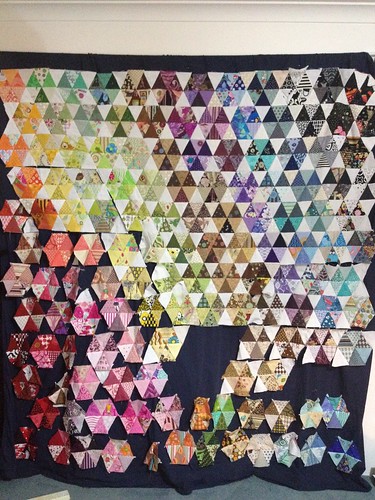

 Immediately, I was captivated – watching a real live female role model launched in full throttle battle. Here was a woman fighting, gallantly, eloquently, passionately, intelligently for all women. (Photo taken from